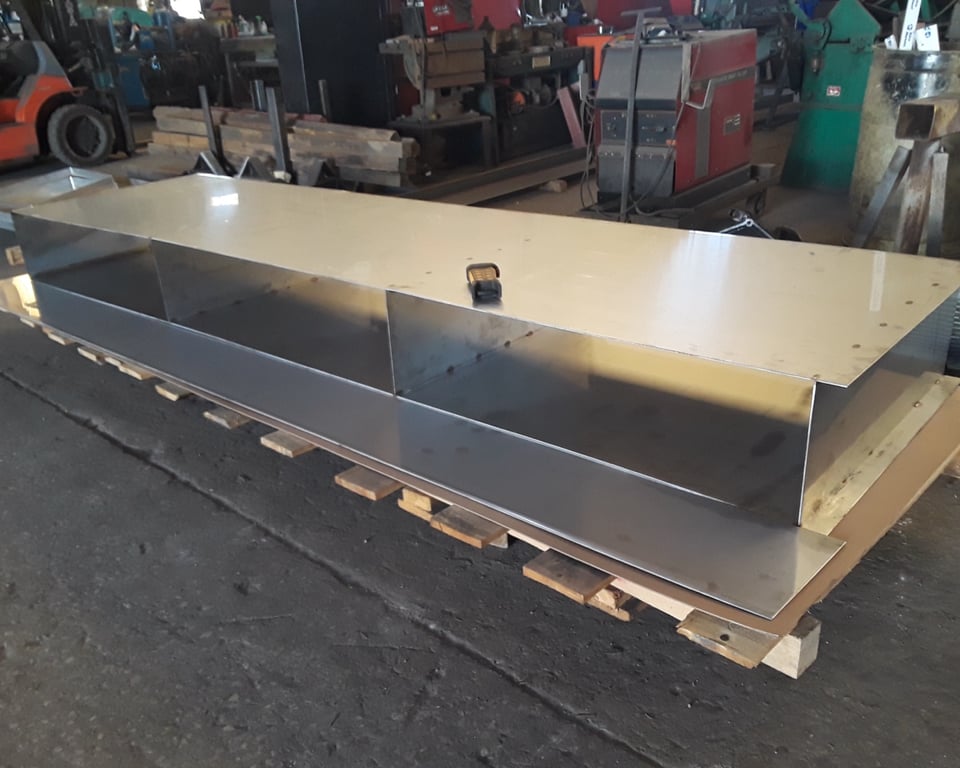
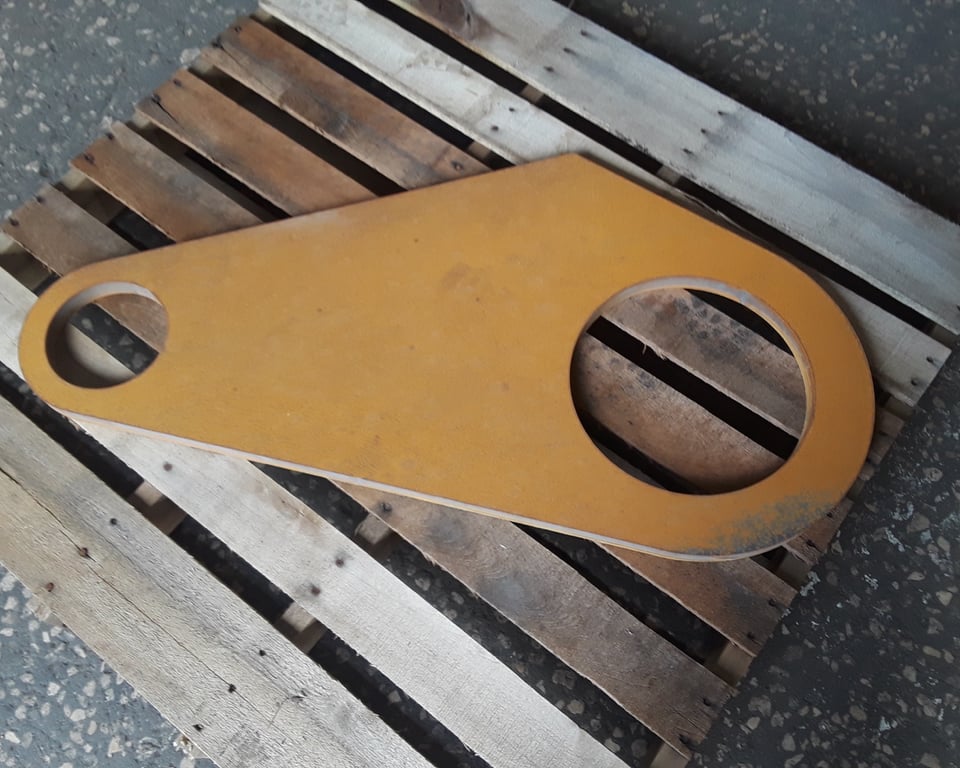
Primary and secondary belt scrapers, V-plows, diagonal plows, and skirt rubber assemblies — fabricated to your belt width, speed, and material profile. Tungsten-carbide-tipped, urethane, or hardened-steel blades.
Material carry-back is the silent killer of every belt conveyor. Wasted product, fouled return idlers, accelerated belt wear, more spillage to clean up under the system — all coming from carry-back that a good belt scraper would have stopped at the head pulley.
A&K fabricates primary scrapers (mounted at the head pulley), secondary scrapers (mounted on the return run just behind), V-plows and diagonal plows (sweeping tramp material off the belt before the tail pulley), and skirtboard assemblies (sealing the load zone). Every component is sized and tensioned for your specific belt width, speed, and material profile.

Mount at the head pulley face, ahead of belt discharge. Tungsten-carbide-tipped blades held in segmented urethane fingers, set at a positive rake angle (typically 30°–45°) to deflect material off the belt. Catches ~60–70% of carry-back on standard installs.
Mounted just past the head pulley on the return run. Negative rake angle (3°–15°) so the blade cleans without "biting" the belt. Tungsten-carbide or urethane blade segments; typically a hold-down roller upstream stabilizes the belt. Adds another 15–25% efficiency on top of the primary.
A third cleaning stage further down the return run for sticky, wet, or high-tonnage applications where a 95–99% cleaning target is required. Urethane finger blades or rotary brush configurations. Common in coal-fired power, taconite, food, and any operation where carry-back to the tail pulley is unacceptable.
Mounted on the return run ahead of the tail pulley to sweep tramp material off the belt before tail-pulley damage. V-plows for centered material, diagonal plows for one-sided material. Standard angle 45° (minimum 25°); urethane or rubber blade with hardened steel back.
Fabricated steel skirtboard frames with replaceable rubber or urethane skirt seal. Custom widths and heights to seal load points and transfer chutes without dragging on the belt. SBR for standard service, urethane for abrasive, FDA white for food.
For sticky materials (clay, slurry, food product) where dry scraping isn't enough — spray washer assemblies with stainless plumbing and machined nozzle manifolds. Brush cleaners with replaceable bristles for very sticky or finely powdered material.
100 mm (4") diameter rollers that stabilize the belt over the secondary scraper — keeps the belt flat against the scraper face and improves cleaning efficiency. Critical above 600 ft/min where the belt would otherwise flutter past the blade.
Spring-loaded, torsion-arm, and pneumatic tensioners that maintain constant blade pressure as the blade wears (per CEMA 576-2021). Mounting brackets adapt to your existing structure — bolt-on retrofit standard, weld-on if access is tight.

Scraper blade life is material against material. The wrong blade rounds off in weeks; the right one runs months between changes. We spec to durometer and temperature limit, not just compound name.
Tell us belt width, speed, and material — or send photos of the carry-back pattern. We figure out blade type, scraper count, and tension spec.
Fixed quote for scraper, blade material, tensioning, and mounting hardware. Replacement blade pricing on file for the next cycle.
Holder, blade, tensioner, and mounting hardware fabricated in the shop. Tensioning preset; blade orientation marked for install.
Drop-shipped, or our crew installs on-site. Initial tension set, runaround check, follow-up tension after first week of running.
Three rules of thumb: dry granular at moderate tonnage = primary only (60–70% cleaning). Sticky, wet, or high-tonnage = primary + secondary (85–95% cleaning). Coal-fired power, taconite, food, or anywhere carry-back to the tail pulley is unacceptable = primary + secondary + tertiary (95–99%). The CEMA "Belt Cleaning Performance Standard" (576-2021) gives target ranges by service. Send us belt width, speed, material, and what's failing today, and we'll spec the right number of stages.
Primary pre-cleaners run at a positive rake angle (typically 30°–45°) — the blade leans into the belt's direction of travel, deflecting carry-back rather than scraping it. Initial spring or pneumatic tension is set per the manufacturer's spec (often around 6–12 psi blade-to-belt) and the tensioner maintains constant pressure as the blade wears. Secondary scrapers run at a negative rake angle (3°–15°) and lower pressure so they clean without biting fabric belts.
Three common causes: wrong blade material for your product (try carbide tip), wrong tension (over-tensioned blades wear and damage the belt; under-tensioned ones miss material), or blade angle off-spec. Send us a photo of the worn blade and the carry-back pattern and we'll diagnose.
An over-tensioned hardened-steel blade can — that's why blade material matters. For belts where damage risk is high (fabric-carcass, lightweight, food-grade), urethane is the safe choice. For abrasion-resistant rubber belts on aggregate or coal, carbide tips run fine without belt damage.
It varies wildly by application — anywhere from monthly (heavy aggregate, abrasive coal) to annual (light food product). A blade is "spent" when it can no longer be tensioned into full belt contact. Many customers put scraper-blade replacement on our Scheduled Replacement Program.
Yes — most scraper installs are retrofits. We measure the head-pulley frame, fabricate a mounting bracket that bolts onto the existing structure (no welding needed in most cases), and ship a complete assembly ready to install during your next outage.
The head pulley your scraper mounts to — drive lagging, end disks, and shafting all machined to spec.
UHMW and AR-plate liners for the transfer chute below the head pulley — the next line of defense against material wear.
Back to the full overview — idlers, bearings, sprockets, take-ups, auger flighting, and more.
Send us your details — drawings, dimensions, or just a description. We'll get back to you within 48 hours on most quotes. For faster response or lead time questions on jobs, just call.
We respond to most quote requests within 48 hours. For faster responses or lead time questions on specific jobs, call us directly at 904-388-7772.
Based in Jacksonville, FL — we ship finished parts and components throughout Florida, the Southeast, and beyond.
Reach us at 904-388-7772, Mon–Fri 7:00 AM – 3:30 PM (closed Sat–Sun).